

Welcome back, Challengers,
Before I could make my first meal of the SNAP challenge, a significant amount of research had to be done to determine what my budget would be and how to allocate the funds towards a week of nutritious meals. Through food stamps, the average individual receives approximately $1.40 per meal (Dean, 2017). However, this is due to the fact that 75% of families receiving SNAP benefits supplement them with their own income (Dean, 2017). The ability to supplement food stamps with one’s own income is taken into account so that all recipients are able to spend $668 every month (for a family of four) (Hoynes et al., 2015). This comes out to approximately $1.80 per meal per individual, the number on which I based my budget for this week. A second factor for consideration was that SNAP accommodates for 3 meals a day, which I do not regularly follow as someone who wakes up too late in the day for breakfast. In the effort to avoid wasting food by making three meals while only eating two, I will do the SNAP challenge over the course of the week with only two meals per day following my regular routine. Therefore my overall budget came to be about $25.

Unlike Gwyneth Paltrow, who spent all of her SNAP challenge funds on the ingredients for a fancy taco night (see right), I wanted to examine how far the money would go towards a balanced, nutritious, and varied week (Hunt, 2018).
In this way, I could better uncover the ways in which a limited budget can affect nutrition, and contrast the nutritional capacity of SNAP with my average grocery spending. To highlight this difference, I will be listing both my groceries for the week based on SNAP and, below it, the additional items I would buy on an average grocery trip (with prices). Throughout the week, I will compare how these different forms of nutrition affect my emotional, mental, and physical state.
I have only a very basic knowledge of daily nutrition, most of which comes directly from educational Youtube videos and simplistic portion control mnemonic devices . One that I’ve found particularly useful has been to relate the aspects of a balanced meal to different parts of the hand (seen in the image below).

This is what I typically base my meals around, and what I tried to hold up to while on the SNAP funds. Perhaps the most glaring difference between my grocery list and the nutritional standard is the lack of fruits and vegetables.
In the effort to have enough volume of food to feed myself throughout the week, fruits and veggies were mostly removed. While basic produce tend to not be expensive, I had to prioritize calorie-rich foods so that I could have filling meals throughout the week. Therefore, from the outset, I will be working with an abundance of starches and a lack of fresh produce.
Also notable while shopping: many times, substitutions were made from the original list based on running sales in the store. For example, pork was on sale so that it became less than my original preference, chicken. To accommodate for more items on my list, I was forced to choose the cheaper option. This also happened with onions, where I would’ve originally selected broccoli, and bagels, which would’ve been bread. In this way, I had to confront a privilege I’d never been forced to consider in my everyday shopping: a consistent grocery list that reflects my food preferences, rather than what was available to me.
Finally, seasonings and dressings (the things responsible for giving food flavor and “fun”) were out of budget. While this was primarily due to the fact that I was cooking for a week rather than in the long term where seasonings could be accumulated, the expectation of bland food isn’t an exciting one. Even from this early stage, clear differences between my temporary experience on SNAP funds and those who depend on it every day have become apparent. The kinds of foods that I’m buying (meant for the short term) are different from ones that I would if I were living off of the budget for a month or year. What other differences will make themselves known as this week progresses?

| SNAP Grocery Item | Cost ($) |
| Eggs | 1.35 |
| Oatmeal | 1.00 |
| Pork | 5.58 |
| Taco seasoning | 0.50 |
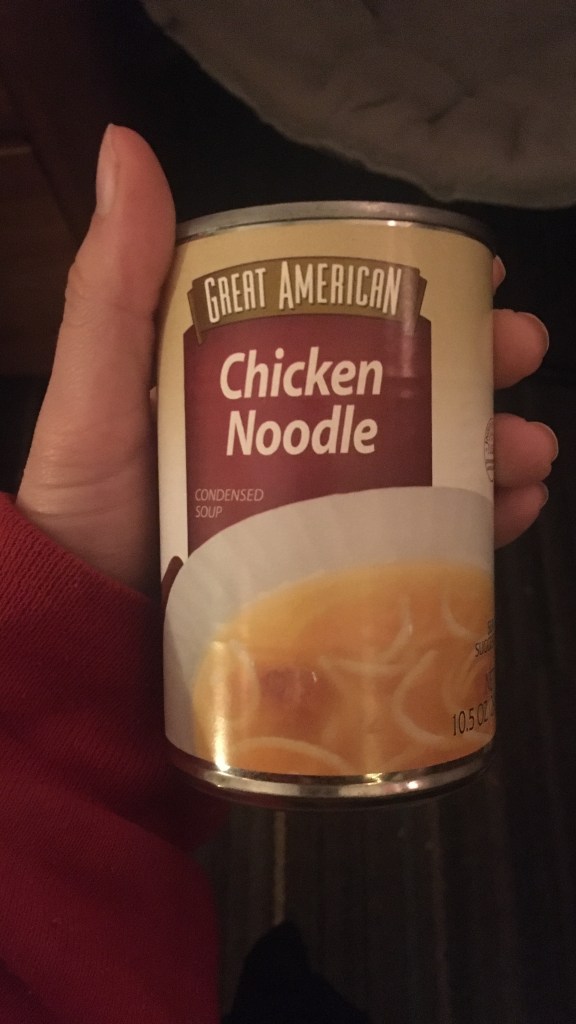
| Soup | 0.50 |
| Rice | 1.29 |
| Tortillas | 1.50 |
| Cheese | 2.59 |
| Onions | 1.50 |
| Yogurt | 1.99 |
| Pasta | .99 |
| Bagels | 1.99 |
| Peanut butter | 2.15 |
| Total (including tax): | 24.56 |
| What would also buy in an average trip | Approximate Cost ($) |
| Avocados | 6.00 |
| Bacon | 4.00 |
| Peppers | 3.50 |
| Carrots | 2.50 |
| Lettuce | 3.00 |
| Salad dressing | 2.50 |
| Salmon | 8.00 |
| Hint of lime chips | 4.50 |
| Milk | 2.50 |
| Red pepper flakes and salt | 3.00 |
| Coffee K-cups | 4.00 |
| Creamer | 2.50 |
| Total (including tax): | 48.57 |
SOURCES
Dean, S. (2017). President’s budget would shift substantial costs to states and cut food assistance for millions. Center on Budget and Policy Priorities.
Hoynes, H. W., McGranahan, L., & Schanzenbach, D. W. (2015). SNAP and food consumption. SNAP Matters: How Food Stamps Affect Health and Well Being, 107-133.
Hunt, K. P. (2018). The SNAP Challenge: Communicating food security capabilities through anti-hunger advocacy. Journal of agriculture, food systems, and community development, 8(2), 87-92.
NutriPro All About Balance – Portions at hand, the ideal portion size. Nestle Professional (July 2019). Retrieved from https://www.nestleprofessional.com/nutrition/nutripro-all-about-balance-portions-hand-ideal-portion-size
 Marion Comi-Morog